
Zoom: Getting Started, Getting Help, and Using Zoom with Canvas

Zoom Flex Workshop Recordings


Zoom Logo

Zoom provides a reliable, easy-to-use, mobile-friendly tool for live, recordable online presentations, meetings, and discussions with audio, video, chat, screen sharing, polling, and more. It can be used within Canvas or independently.

Zoom Pro is available to all MiraCosta faculty and staff at no charge. Students don’t use the Zoom Pro account but can use free Zoom basic accounts. Nobody at MiraCosta should be paying anything to use Zoom!

The version of Zoom that MiraCostans use changed after the fall 2020 semester; MiraCosta Zoom is now accessed at miracosta-edu.zoom.us rather than conferzoom.org or cccconfer.zoom.us. Faculty need to sign in to Zoom with their MiraCosta College login and password to obtain unlimited pro (“licensed”) access to all features of Zoom, including:

  • Unlimited meeting lengths and very large numbers of attendees
  • Recordings “in the cloud” so that you do not need to manage large files of your recorded meetings
  • Auto-transcription of your cloud-based Zoom recordings

This page includes basic technical how-to information and resources on using Zoom in general, and Zoom use in tandem with Canvas. Please see our separate Teaching with Zoom at MiraCosta College page for more detailed tips about teaching securely, effectively, and accessibly with Zoom.

Log On to Zoom at MiraCosta College

  1. To access your Zoom account via the web go to: https://miracosta-edu.zoom.us
    Sign in with your MiraCosta College employee account and two-factor authentication (2FA).
  2. To sign into Zoom app(s) on desktop and mobile:
    1. Open the installed Zoom app. (Download the latest Zoom apps from https://zoom.us/download )
    2. Select the ‘Sign in with SSO’ button or option at the app login screen
    3. Enter our ‘Company Domain’: miracosta-edu
    4. You will be directed to our MiraCosta login portal where you will enter your MiraCosta credentials.

MiraCosta Zoom Help and FAQS

  • Zoom help for MiraCosta faculty, staff, and students is through the ITS Help Desk
  • General MiraCosta Zoom account help and FAQs (You will need your MiraCosta credentials to access this).
  • How do I get a Zoom account? If you had a pro Zoom account through ConferZoom prior to 2021, it should have been automatically migrated to the MiraCosta Zoom, and there’s nothing you need to do. If you did not previously have a Pro Zoom account, and need to create a MiraCosta Zoom account, sign in to the MiraCosta Help Desk in the Portal and select the User Accounts option.
  • What if I’m having trouble with my Zoom account? Sign in to the MiraCosta Help Desk in the Portal and click the User Accounts button to request help.
  • What happened to my Zoom recordings made before 2021? They are still in your Zoom account! The old links to Zoom recordings will still work, but a message will briefly appear when people click an old link. If you update an old recording link with the new MiraCosta Zoom URL (replace cccconfer.zoom.us with miracosta-edu.zoom.us in the link) it will work seamlessly.
  • What happened to my recurring Zoom meetings I set up before 2021? Similar to your recordings, old links to recurring Zoom meetings will still work, but a message will appear when people click an old link. If you go to your Zoom account, you’ll see that your meetings have been migrated in, and you can get a new invitation. You can also simply update a meeting link created before 2021 with the new MiraCosta Zoom URL (replace cccconfer.zoom.us with miracosta-edu.zoom.us in the link).
  • What happened to Reports from Zoom meetings held before 2021? They are gone, sorry.
  • How much storage do I have for Zoom recordings? As of spring 2021, there is not a limit; however, this may change in the future if we do not manage our recordings well. Please delete recordings that you do not need.

Zoom Documentation

The following Zoom trainings, documentation, and resources can help you stay informed:

Using Zoom with Canvas

You can schedule and share Zoom meetings and recordings directly within Canvas, using the Zoom integration. To get started and learn more about the Zoom/Canvas integration, see directions below.

Note: You may also share individual Zoom meeting links and recordings in Canvas without using the integration.

Canvas Integration with Zoom

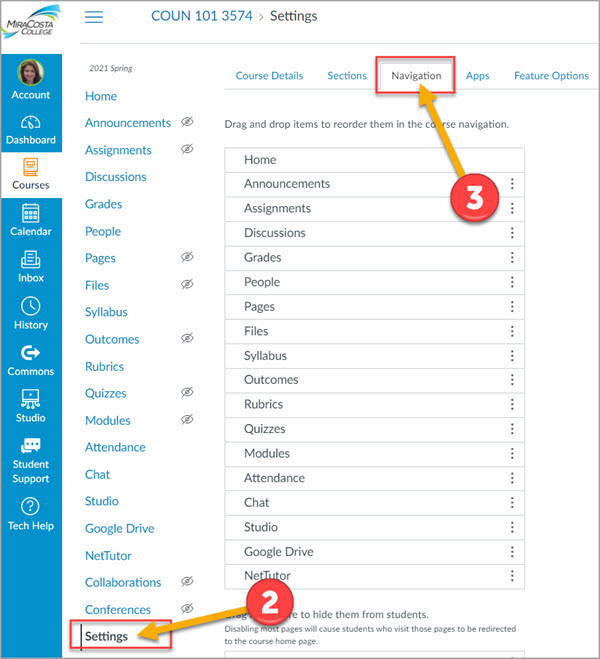
  1. Enter your Canvas course
  2. Click Settings on the course menu
  3. Click the Navigation tab
Step 2 and Step 3
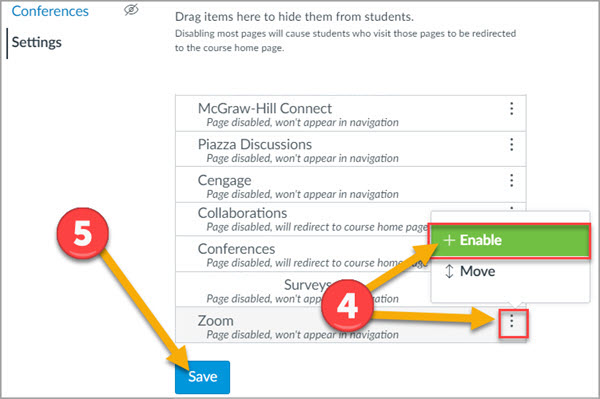
  1. Click the 3 dots to the right of Zoom and select Enable.
  2. Click the Save button
Step 4 and Step 5
  1. Click the Zoom course menu item which will appear in your course menu.
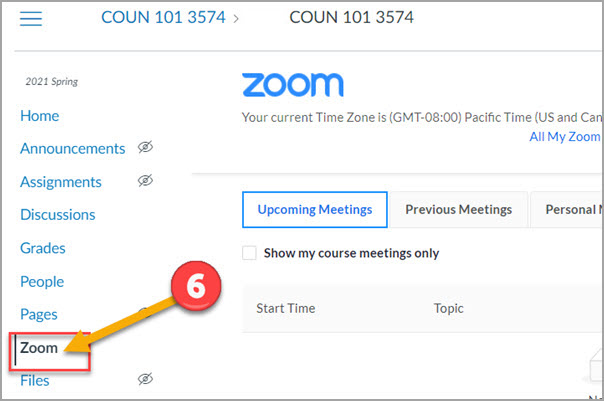
Step 6

Now you can schedule and access Zoom meetings from inside of Canvas.

Viewing All My Zoom Meetings in Canvas

When you first enter Zoom on Canvas you will see only the Zoom meetings associated with the Canvas course you entered from. To see and access all Zoom meetings within your account, click the link ‘All My Zoom Meetings‘.
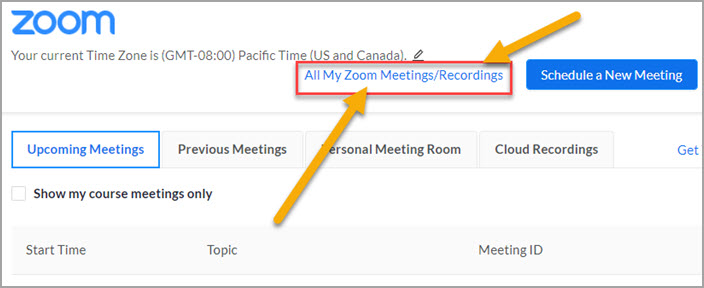
All My Zoom Meetings link in Canvas

Adjust-All tool just added to Canvas: May be useful RIGHT NOW!

Dear faculty and friends,

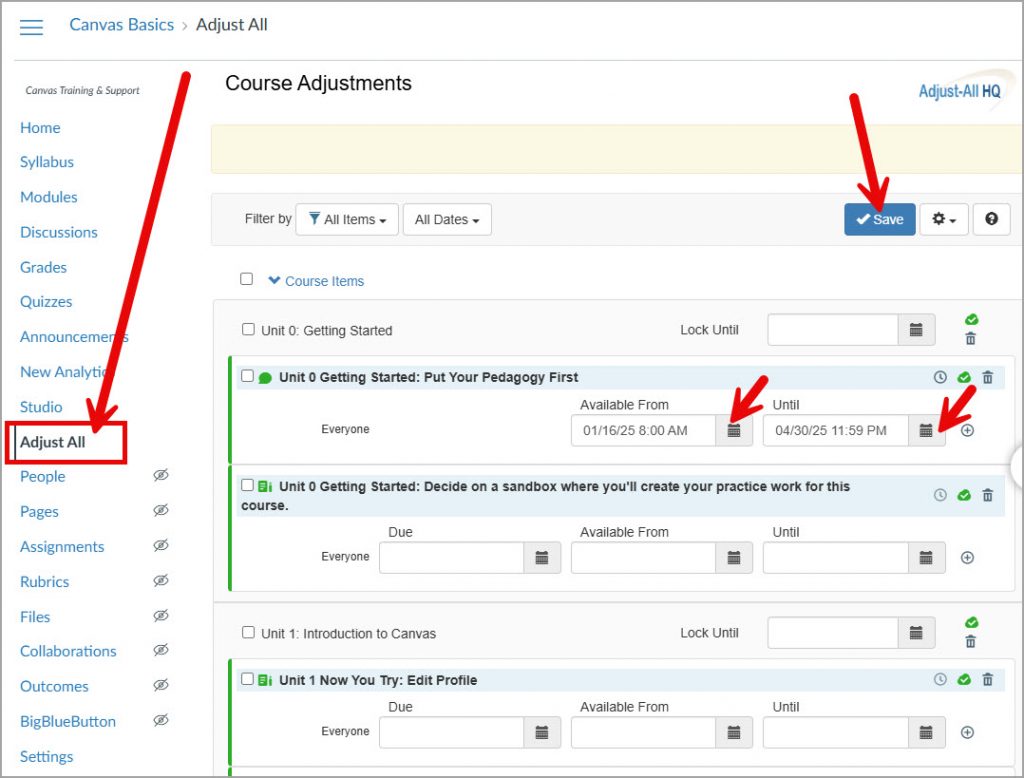
We’ve just added a new tool to Canvas called Adjust-All. It’s a simple tool that can make life at this time of the year, when copying previous Canvas courses for reuse, a lot easier. It enables you to change all course item due dates and announcement publication dates in one place, rather than having to access each item individually. You’ll find “Adjust All” now toward the bottom of each Canvas course’s navigation menu. Here’s a short (3½ minutes) video to show you how it works!

Couple quick notes:

  • The first time you use Adjust-All, you’ll need to click the blue Authorize button – it’s fine 😊
  • You may see a message that this is a trial subscription – it is, but our purchase is in process.
  • This tool is only available to faculty – students won’t see it in your course menu.
  • The tool does not currently work with New Quizzes, so if you are using New Quizzes, you’ll still need to adjust due dates one by one, the old way.
  • There are a few other things you can do with Adjust-All. Click the gear icon at top right to see options for bulk adjustments to dates or publishing status.
  • See the Adjust-All user guide for more tutorials and guides to using Adjust-All.
Adjust All in Canvas

Happy adjusting!

– Jim

Jim Julius, Ed.D.

Faculty Coordinator, Online Education

Spring 2025 online teaching resources & reminders

Dear colleagues, I hope your break was restorative and you’re feeling as ready as possible for 2025! Please see below for reminders of local resources to help you enable your students to succeed in online environments this spring.

Expectations and Recommendations for Faculty Teaching Online

Support for You

  • Our Canvas start-of-term checklist can help you prepare your classes. New to Canvas? We have lots of resources to help you get started, as well as workshops this week!
  • The TIC website is a great starting point for all kinds of information and support for teaching with online technologies – see the last section of this email for specific TIC links to MiraCosta technologies supporting online teaching and learning. 
  • Ongoing faculty support – You can set a meeting with Instructional Designer Nadia Khan, for help with Canvas and teaching with tech. We have a new instructional designer also available for 1-1 support, Stephanie Kelley, especially for faculty working on use of OER/ZTC course materials.
  • Tech Support – Canvas options include 24×7 phone and chat support. Just click the Tech Support button at lower left in Canvas! Zoom and other MiraCostatech support for faculty is available through the MiraCosta employee help desk.

Support for Your Students – Please help your students to be aware of and make use of these important services and resources!

  • Student Online Academic Readiness workshops – In collaboration with the library, I’ll be offering a number of these across the first nine weeks of the term – see all dates and times on the MiraCosta Online site and in Canvas announcements. These workshops engage students with resources MiraCosta provides to support them, as well as habits and attitudes of successful online students. Encourage your students to attend and, if you like, find out which of your students participated in order to incentivize their attendance. Faculty are welcome to attend as well!
  • Technology Needs – Be sure to share the form for students to fill out if they need a laptop and/or wifi hotspot to succeed this semester.
  • Tech Support – At lower left in Canvas is a button for students to quickly access Tech Support options, including 24×7 phone and chat support from Canvas, and our local MiraCosta student help desk.
  • Online Student Support Access Points – the Student Support Hub in Canvas, accessed via the Student Support button on the left in Canvas, gives quick access to online support from the library, Learning Centers, counseling, career center, open computer lab staff, student help desk, health services, CARE team, and more! The Ask the Spartan chat integrated into MiraCosta’s website provides both automated responses and the opportunity to connect to Live Chat with staff from many student support areas. The Help Hut and Online Education webpages are also great starting points for students to connect with all kinds of support services when they’re not in Canvas.

MiraCosta’s Online Education Tools

Select the links for a detailed MiraCosta-specific overview (and often, recorded Flex workshops) for each tool below. Please don’t hesitate to contact me if you have questions about these or other resources.

  • Canvas – we all use Canvas, right?
  • Zoom – if you’re using Zoom, make sure you’re using a pro Zoom account through MiraCosta.
  • Canvas Studio – enables faculty and students to create videos while inside Canvas. Faculty can create interactive discussion or quiz activities based on video. Auto-captioning and caption clean up tools are high-quality and easy to use, but not automatic!
  • Pronto is an incredible mobile-friendly and Canvas-integrated messaging platform that’s ready to use in every course.
  • Pope Tech helps faculty detect and correct accessibility issues within Canvas. The PopeTech dashboard tool (via the Pope Tech Accessibility course menu item) provides a course-level guide for addressing all accessibility issues in a course in one place.
  • SensusAccess provides multi-format course material accessibility and file type conversion options for students. If you notice an S symbol next to your page title and next to items in the Modules view, that’s SensusAccess.
  • Perusall is a social annotation tool available within Canvas that makes it easy for students to comment/discuss right on a text, document, or image.
  • Lab Archives Electronic Notebook is an online notebook especially useful for translating lab manuals and student notes/work into the online environment.
  • PlayPosit – This video interaction tool offers more complexity and options than Studio. Studio is a great place to start, but if you’re looking for more types of interactivity to add to your videos, PlayPosit is great. 
  • Turnitin – help students learn to properly cite sources and avoid plagiarism. Also provides grading and peer review tools for written work. Turnitin has included an AI detection capability for instructors, but please beware of false positives should you use it. Most experts agree that AI detection tools are extremely unreliable.

Professional Learning for Online Teaching – Spring Possibilities

  • In addition to many online ed workshops this Flex week, you can review lots of wonderful recorded MiraCosta online teaching workshops anytime (Flex-eligible, of course)! 
  • Friday, Jan. 31: MiraCosta is holding a college-wide day for discussing and learning about AI. Please RSVP and consider proposing a faculty-focused session.
  • First and third Thursdays, 12:30 pm on Zoom and in OC T250: Jim Sullivan, Nadia Khan, and I offer regular discussions on teaching with technology. Look for announcements from Jim S, MiraCosta’s Joyful Teacher (aka Capybara guy).
  • March 10-14: San Diego area community colleges are offering a joint online AccessAbility Week with online workshops throughout that week.
  • June 16-18: The CCC Online Teaching Conference returns to Long Beach. Consider submitting a proposal (due Jan. 31)! MiraCosta faculty who are presenting can get all travel expenses covered from the Online Ed budget!
  • @ONE online teaching courses are open to all California Community College faculty. Some are self-paced and available anytime. Facilitated spring courses are open for enrollment now, and are completely free. They’ll fill, so sign up now if you’re interested!

Best wishes for a great spring!

– Jim

Jim Julius, Ed.D.
Faculty Coordinator, Online Education

Filtering Canvas Grades to Only Show SURF Enrolled Students

By default the Grades tool will display all users in the roles Student, Sample Student, Evaluator, and TLC Staff within your Canvas course. This can make grading difficult as the additional roles will mix in alphabetically with your SURF Enrolled students.

For ease of grading, you can filter your gradebook by section to only display SURF enrolled students.

From within Canvas:

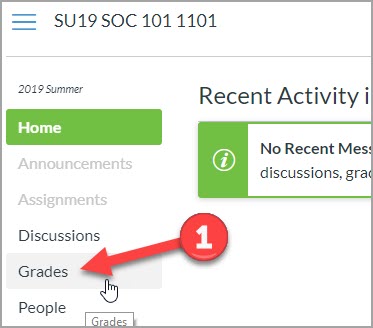
  1. Click on Grades
Step 1 Grades Filter
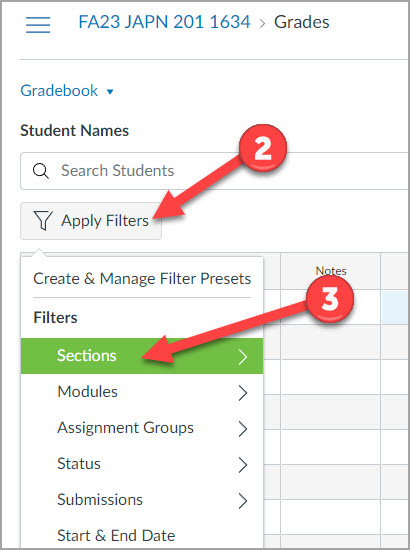
  1. Click the Apply Filters button
  2. Click Sections
Step 2 Click Apply Filters button and Step 3 Click Sections
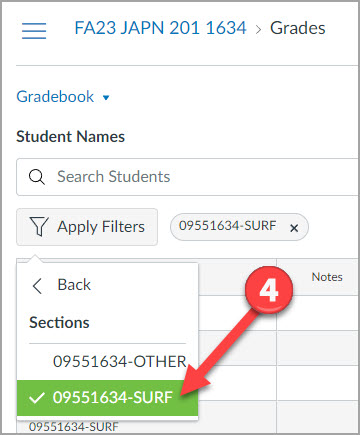
  1. Select the section number that ends in -SURF
Step 4: Select the section number that ends in -SURF

To display only users in the -OTHER roles 

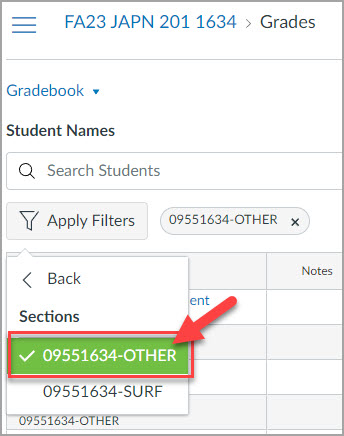
  1. Select the section number that ends in -OTHER to view only non-SURF enrollment types.
The -other section selection.

To display all users together in the Gradebook

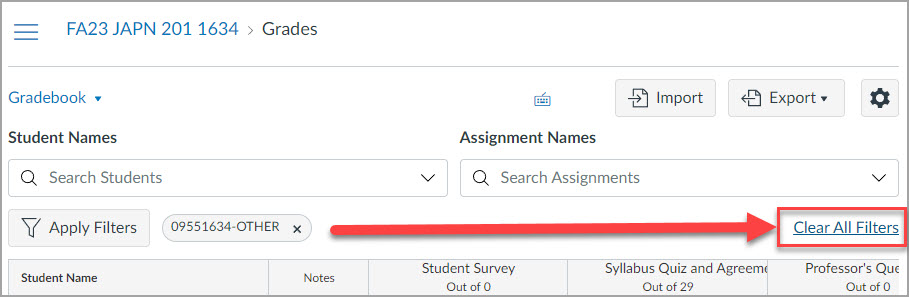
  1. Select the Clear All Filters link on the right side of the Gradebook to view all enrollment types.
Clear All Filters

Custom Filters in Gradebook

It is possible to build a gradebook filter in Canvas that is just right for your grading needs. These custom gradebook filters can be used once or saved for future use.

SensusAccess – Alternative Media Made Easy

Sensus Access Notices & Flex Workshops Recordings


Sensus Acess Logo

SensusAccess offers two ways for MiraCosta faculty, classified professionals, and students to convert all kinds of documents and files into alternative and more accessible formats:

  • A website in the portal (MiraCosta login required) that allows you to upload files including Word or PPT documents, scanned images, PDFs, or web pages and generate accessible alternative types of files and media, including PDF, audio, e-books, Braille, and large print. This helps meet accessibility standards and enhance inclusion by supporting preferences and needs of diverse users.
  • A Canvas integration that automatically enables conversion of files uploaded into Canvas into alternate file and media types.

Key Features

  • Automated conversion of files into a range of alternative media and file formats
  • Remediation of inaccessible documents such as image only PDFs into accessible formats

Sensus Access in Teaching and Learning

For faculty, Sensus Access offers an important pathway to one element of Universal Design for Learning – enabling students to access course materials in the format that works best for them. Some examples of how students are likely to benefit from Sensus Access:

  • Conversion of Canvas pages or documents shared in Canvas into MP3 files for listening rather than reading
  • Conversion of course materials into formats that can be viewed offline, if the student does not always have reliable Internet access
  • Conversion of course materials into eBook format for students who prefer use of an eBook reader (such as a Kindle)

Faculty may choose to proactively use Sensus Access to generate alternative formats of course materials. Faculty may also, or alternatively, wish to remind students about the availability of Sensus Access to them, empowering them to make their own decisions about how and when to use this tool. For example, when faculty create an introductory screencast guiding students through the Canvas navigation and organization of a course, simply adding a few moments to point out the Sensus Access function on a Canvas page, and describing what it can do, can be a quick way to raise student awareness and agency!

For more information on SensusAccess and its use check out the SensusAccess website and one-page Canvas LTI description.

1 … 4 5 6 7 8 … 14